
Air conditioners strive to be effective in cooling and reduce power consumption. But there is a bit of it–the filter–that when it is not cleaned up may increase your bill a little.
Most house owners ignore the fact that a dirty filter causes less efficiency, compels the device to work more, and may increase the monthly electric bills.
This manual discusses the effects of a dirty filter on your bill, how it affects your cooling system, the warning signs and how regular maintenance helps us save some money.

What Is an AC filter and Its functionality?
The filter is located within the internal part and covers it by: trapping dust and dirt; capturing pollen and allergens; excluding debris out of the parts; enhancing the indoor air quality. It provides the first line of defense of the system.
This filter however becomes obstructed with dust and pollutants in the course of time.
The way that dirty AC filters increase the amount of electricity used.
The technical reasons are provided in steps below.
- Limited air flow causes the AC to labour. A contaminated filter slows down air, decreases airflow, and decreases the efficiency of cooling. The unit then extends further and works harder in order to achieve the desired temperature.
Outcome: increased electricity, compressor working, and operating cycles.
A small obstruction can increase the consumption of energy by 5-15%.
- The longer the cooling cycle the greater the power.
A clean filter allows the AC to cool fast and switch off on hitting the target temperature. A soiled one retards cooling, maintains the operation of the compressor, and since the compressor is the highest consuming electricity, the long-time operation increases the bill. - The blower motor was under more pressure.
The fan blows the air via the filter into the room. A low airflow results in increased work load by the motor, higher electricity consumption and higher temperature, all of which result in increased consumption, wear, and the possibility of failure. - Evaporator coil problems.
Poor airflow damages the coil of the evaporator, decreases the absorption of heat, forms ice and lowers cooling. Frozen coils compel the AC to consume excessive power, uneven cooling, and decline the overall efficiency. - Short cycling.
When the filter is clogged, then normal cooling is disrupted resulting in frequent compressor starting, short bursts of cooling and erratic room temperature. The bill is increased with each restart, which results in a surge of power. - Reduce thermostat because of poor cooling.
When the AC appears slow, individuals will lower the set point, e.g. 24 0 C to 20 C, making the unit strain and consume more power.
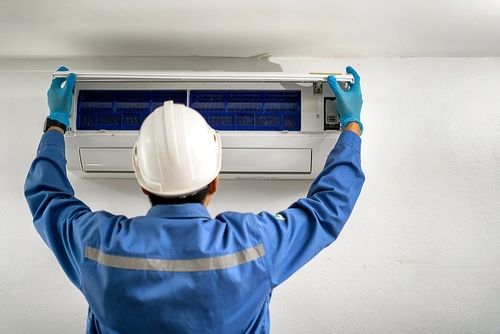
How big a difference can dirty Filters make your Electricity Bill?
The actual actualization is different, but research indicates 5-15% of increased energy consumption. In homes with heavy usage it can be even bigger, hundreds or even thousands of dollars are added to the annual bill, reducing the life of the system, and increasing the cost of its maintenance.
Warning Your AC Filter Is Adding to Your Electric Bill.
Watch for these symptoms to identify an ineffective filter: poor ventilation, ineffective room cooling, the air conditioner is on constantly, increased bills, dust accumulation in and around the vents, poor smell, or an ice on the indoor unit. In case of any incidence, check the filter immediately.
Why Dirty Filters, too, are a Problem with Air Quality.
Contaminated filters do not just overcharge. They reproduce dust, cause allergy, disperse bacteria and spores of molds and induce breathing discomfort. Air quality is also a determinant of poor comfort and health.
How frequently do you clean AC Filters?
Wash twice or thrice a month when there is heavy usage of AC.
Wash after 1-2 months of moderate use.
Wipe away obviously dirty.
They also require frequent cleaning in case of pets, smokers, high-pollution zones, and allergic individuals of the house.
Cleaning AC Filters in 6 Easy Steps.
- Always make off the unit when starting.
- The front panel has to be opened in order to access the filter compartment.
- Gently slide out the filters.
- Clean them with water with or without mild soap.
- Allow the filters to dry fully; never replace them when wet.
- Install them again and ensure they are put in the right orientation.
The advantages of cleaning up AC Filters.
- Reduced bills- airflow reduces energy consumption.
- Quickly cooled rooms- rooms reached set points quicker.
- Extended life-span- reduced compressor and motor power.
- Improved air quality- reduced dust and allergens in the air.
- Less repairs- prevents coil freezing and burnout of the motor.
Dirty Filters vs. Professional Service.
Filter cleaning is simply simple maintenance- it does not take the place of full servicing. A comprehensive service includes cleaning of the evaporator coil and condenser, refrigerant service, electrical check and drain cleaning.
Saving Energy Tips other than Filters Cleaning.
Other methods of saving: set the thermostat to 24-26o C, ceiling fans, doors and windows closed, use thermal curtains, arrange annual service, use inverter technology, and use high-star rated units.
Long‑Term Financial Impact
Not caring about dirty filters welcomes compressor destruction, burn-out of motors, freezing of coils, and complete breakdown of the entire system. a replacement of a compressor is much more expensive than a regular cleaning. Minor negligence is a major cost in future.
Science of the Loss of Energy Efficiency.
ACs operate on the principle of heat exchange. A constrained flow of air slows the process of heat transfers, distorts the pressure of the system, and increases the amount of energy required at every cooling cycle- hence, the consumption of electricity increases.
Popular Myths of AC Filters.
Myth 1: Filters do not have an influence on power consumption. Fact: They determine air flow and efficiency.
Myth 2: New ACs need no cleaning. Fact: Immediately dust accumulates.
Myth 3: It is all only the outdoor unit. Fact: The flow of indoor air is equally important.
Environmental Impact
The increased energy consumption increases the carbon emissions, the power consumption, and the carbon footprint. Dirty filters cause waste of energy.

Final Conclusion
A contaminated AC filter is not a big deal but it can steeply increase your power bill.
Filter obstructions also limit the amount of airflow, increase cooling times, overload the compressor and reduce efficiency resulting in increased power use and strain on the system.
The solution is simple:
✔ Clean filters regularly
✔ ✔ Professional servicing.
✔ Monitor energy usage
✔ Nip problems in the bud when performance suffers.
Cleaning filters is cost-effective and improves cooling operation, air quality, as well as the system life.
Read What Happens During a Professional AC Service?
Follow Us on : Instagram