
The heat during the summer may push the air conditioners and make them run high resulting in high electricity bills. There are a lot of people, who think that when setting the AC to the minimal temperature, they will cool the room more quickly, but it is quite an expensive myth.
The most intelligent solution to balancing comfort, energy saving, and AC performance would be to choose the optimal Temperature Settings.
What is The optimal Temperature Settings of AC in summer?
Recommended Environment: 24 o C to 26 o C (75 o F to 78 o F)
The habit of power analysts and energy specialists is that an ideal way to save energy is to have your AC set between this range.

This Temperature Settings provides:
- Comfortable cooling
- Usage of less electricity energy.
- Reduced load on the compressor.
- Balanced humidity control
The Reason Raising AC too Low Hikes Electricity Bills.
The reason why many users are setting their AC to 18 o C or 20 o C is because they believe that this will cool the room quickly. The fact is that an AC will cool down at the same rate with the temperature set, the lower the temperature is, the longer the AC will be operating.
Compressor operates continuously at 18 20 C temperature, consumption of power rises, electricity bill is very high, room might feel too cold and wear and tear are greater. Actually, a drop in temperature by only 1 o C may raise the power use by approximately 6 percent.
How 24–26°C Saves Electricity
At 2426 o C, the compressor runs as usual, the AC takes less time to achieve the required temperature, power consumption remains steady, humidity is maintained in check, and cooling is comfortable.
This is the most convenient range in respect of cost-effectiveness and comfort.
Temperature settings depending on the type of room.
Bedroom (Night Use): 25 26 o C and use a ceiling fan to circulate the air better.
Living Room 24-25o C – particularly when there are several individuals.
Office or Workroom: 24 o C – is alert and comfortable.
Older or Infants: 25 o C is recommended – do not use very low temperatures.
Why Ceiling fans are useful in lowering AC expenditure?
With the AC, a ceiling fan enhances the circulation of air in the room, makes the space feeler cooler, and enables you to increase the AC temperature by 1- 2 o C and lessen compressor loads. A fan and 26 o C can be the same as 24 o C with no additional power consumed.
Optimal Summer Temperature by Various Conditions.
Very hot (Over 40 o C): 24-25 o C ideal – do not change the outdoor and indoor temperatures drastically.
Moderate Summer (30 -35 o C): 25-26 o C is adequate.
Humid Weather: 24- 25 o C controls the moisture.
The most suitable temperature of inverter ACs is 260 degrees Celsius.
Inverter ACs automatically change the speed of compressor. Ideal setting: 24–26 °C. Reduced settings lead to inefficiency in inverters.
It is common to find 24 o C referred to as the standard.
Most common buildings (offices, malls, hotels, airports) have temperature between 24-28 °C since 24C is viewed as comfortable, energy saving, and less strain on the electrical systems.
Background on the Science of Energy Savings.
Air conditioners are used to remove heat indoors. In very low temperatures, the temperature difference is more demanding and more heat must be removed, compressor should work longer and more electricity is consumed. Medium environments save on heat and energy requirements.
The Advantages of Night Mode / Sleep Mode.
The majority of contemporary ACs have sleep mode.
- Rises the temperature slowly in the night.
- Prevents overcooling.
- saves on electricity.
- Improves sleep comfort.
It is possible to save 5-10 percent of energy during sleep.
How Much Can You Save?
By turning the AC to 26 2C rather than 20 2C, it is possible to:
- Reduce energy use by up to 20–25 %.
- Reduce the monthly electricity bills critically.
- Extend compressor lifespan.
The difference in savings is dependent on the use time and weather.

Myths about AC Temperature Settings.
With low temperature, the cooling rate is higher.
Reality: There is no difference in the cooling speed.
18 °C is best for summer.
Reality: It wasted electricity.
The greater the temperature, the less cooling.
Reality: 2426 o C remains comfortable.
Other Pointers to Conserve power during summer.
- Close doors and windows, to avoid the entry of heat.
- Curtain or blinds can be used to block sunlight and decrease the heating load.
- Be sure to service your AC, dirt filters are a waste of power.
- Wash filters after every 2 to 4 weeks to enhance air flow and performance.
- Do not keep on changing the temperature; allow the AC to stabilize.
- Turn to the appliances with a high start rating and use them effectively.
- Close air escapes to avoid cooling of air.
Theoretical Minimum Temperature Settings Change.
The professionals suggest keeping the temperature indoors at least 6 -8 ° C below the temperature outdoors.
Example: Outside 38 °C → Inside 24–26 °C.
Severe variations put compressor pressure on strain.
Health advantages of Correct temperatures in the house.
Extremely low temperatures may result in: sore throat, dry skin, headache, joint aches, cold, and cough. Comfortable environments are healthy.
Environmental Benefits
Higher AC temperature:
- Reduces electricity demand.
- Lowers carbon emissions.
- Favorable to energy conservation.
Individually, small changes have a large difference.
When to Raise Temperature Settings a Little Lower.
Think 2324 o C when: the room is sunny, there is a big group of people, it is not well insulated or it is very humid. Do not allow the temperature to fall below 22 o C.
Summer 2026 Energy-Saving Checklist in a Minute.
- Set AC between 24–26 °C
- Use ceiling fans
- Clean filters regularly
- Activate sleep mode at night
- Close doors and windows
- Curtains when the sun is at its brightest.
- Service AC before summer
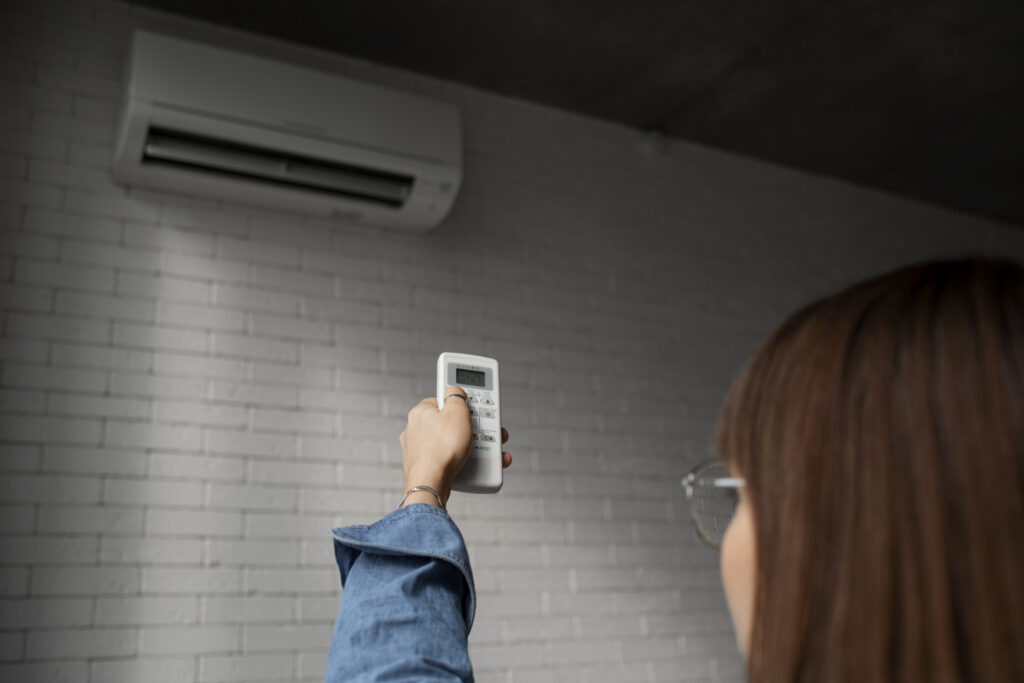
Final Recommendation
The optimal Temperature Settings to save on electricity during summer is 24 o C to 26 o C.
The range will guarantee safe cooling, decreased electricity expenses, decreased compressor pressure, increased AC life, and healthier interior environment.
ather than reducing the temperature to a very low level, emphasize on smart use and frequent services to ensure that maximum savings are realized.
Read AC Maintenance of Homes vs. Offices: What is the difference?
Follow us on: Instagram